


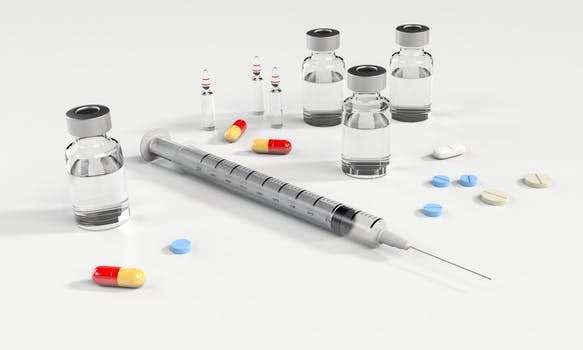
Drug-induced Fever
How to suspect that your medicine is the cause of fever
Definition
Drug-induced fever is a febrile response that occurs simultaneously with drug administration and disappears after the discontinuation of the culprit drug. Also, drug-induced fever can be defined as (the febrile response to a drug without cutaneous manifestations). This term can help differentiate drug-induced fever from Drug reaction. Drug reaction with eosinophilia and systemic symptoms (DRESS), also known as drug-induced hypersensitivity syndrome (DIHS).
Although of common incidence; It is under-diagnosed condition and may results in unnecessary investigations and/or even hospitalizations.
A risk /benefit relationship should always be weighted.
The incidence increases with the number of drugs prescribed. It occurs commonly in older patients and AIDS patients.
History
The Hidden Clue in Your Past: How Your Medical History Unlocks the Mystery of Drug Fever
Here’s a secret your doctor wishes you knew:
That fever you can’t shake? The answer might not be in your bloodwork or scans. It might be hiding in a chapter of your medical past that nobody is rereading.
Drug fever isn’t random. It’s a highly personal reaction—and your medical history is the master key to diagnosing it.
If you’ve ever had a mysterious, unexplained fever while on medication, you need to become a detective of your own past. Here’s why. 🔍
Your Body Has a Memory: The “Antigenic Recall” Phenomenon
Think of your immune system as a veteran soldier with a long, detailed memory. If it has encountered a drug (or a similar compound) before and tagged it as a threat, the reaction can be faster and fiercer the next time.
This is why your doctor must know:
Have you ever had a rash, hives, or swelling with a medication? Even if it wasn’t a “severe allergy,” it signals a sensitized immune system.
Did you have a strange or unexplained illness while on antibiotics years ago? That could have been a missed drug fever.
Have you taken this drug—or one in the same family—before? Your history is the biggest predictor of future reaction.
The Top 5 Clues in Your Medical History That Scream “Drug Fever”
The “Rechallenge” Red Flag: This is the gold-standard clue. Did the fever disappear when the drug was stopped in the past, only to return when you tried it again? That’s a classic signature of drug fever. Your chart should have this highlighted in red.
The Autoimmune Connection: If you have an autoimmune disease (Lupus, Rheumatoid Arthritis, etc.), your immune system is already prone to overreaction. You are statistically more likely to develop idiosyncratic drug reactions, including fever. Your baseline is “inflamed.”
The Slow Acetylator Status: This is a genetic trait affecting how quickly your liver metabolizes certain drugs. Slow acetylators process drugs slower, leading to higher concentrations and a greater chance of adverse reactions like fever. It’s written in your DNA—if anyone has ever checked.
Past Organ Transplant or Chronic Illness: Patients on multiple, long-term medications (like transplant recipients) are exposed to more potential triggers. Polypharmacy itself is a major risk factor. The more drugs you’re on, the higher the chance one is causing the fever.
A History of “Unexplained Fevers”: This is critical. If your chart has multiple episodes of fevers that resolved without a clear infectious source, a pattern emerges. It points to a body that is prone to inflammatory or hypersensitivity responses.
The Conversation That Will Change Your Care
At your next appointment, don’t just hand over your medication list. Initiate this script:
“Doctor, before we order more tests, I want to review my full history for drug reaction clues.
In my past, I have taken these drugs: _______.
I have a history of [Autoimmune Disease/Previous Unexplained Fevers/Organ Transplant].
A relative had a severe drug reaction to _______.
Could we consider a monitored drug holiday to see if the fever resolves?”
This transforms you from a passive patient into an active diagnostic partner.
The Family Tree Connection
Your medical history isn’t just your history. Did a parent or sibling have a “bad reaction” to a medication? Familial drug hypersensitivity is a real, genetic clue. Mentioning this can prevent you from being given a drug from the same dangerous family.
The Bottom Line: Your Past is a Diagnostic Tool
In the rush for new tests, the most powerful data point is often overlooked: the story of you. A meticulous review of your medical timeline can spare you weeks of invasive testing, unnecessary antibiotics, and hospital stays.
Drug fever isn’t just diagnosed by what’s in your blood. It’s diagnosed by what’s in your chart.
Found this eye-opening? SHARE it.
Tag someone who’s been on a long medical mystery tour. Give them the clue they’ve been missing.
Be the reason someone stops searching and starts healing. ✨
P.S. If you’ve ever solved a health mystery by connecting dots in your own history, share your story below. Let’s inspire others to dig into their greatest diagnostic asset: their own story.
You will find a history of allergy (hypersensitivity) in many but not in all patients.
Some patients have been on sensitizing medication for years without a problem
Clinical examination in Drug Fever
Relative bradycardia (The heart rate increases disproportionately/out of the degree of fever).
Patient appears inappropriately in good general condition for the degree of fever.
Fever may be low or high grade but usually ranges (102-104F°) and may exceed 106 F°.
Diabetes and Kidney, Heart Attack and Stroke
Laboratory investigations in drug fever
Elevated white blood cells WBCs count or may be decreased in drug induced fever. The white blood cells are elevated in the majority of infections (bacterial, viral or fungal).
Eisinophils almost always present in the complete blood count (CBC) but eisinophilia (increase in esinophils numbers) is uncommon.
Elevated Erythrocyte sedimentation rate (ESR), and C-reactive proteins occur in the majority of cases.
Negative blood cultures (Excluding contamination).
Early mild elevations of liver enzymes serum transaminases commonly occur.
Drug Fever, and it’s one of medicine’s most bizarre, counterintuitive, and frequently missed diagnoses. This isn’t an allergy. This is your body declaring war on the very thing meant to heal it.
Let’s decode the silent alarm 99% of people—and even some doctors—ignore. 🔥
What Is Drug Fever? (The Short, Shocking Answer)
It’s a fever directly caused by a medication you are taking, not by your underlying illness. It’s a known but often overlooked side effect where your body mounts an inflammatory response to the drug itself.
The cruel irony? You take a pill to feel better, and your immune system treats it like a biological threat, launching a full-scale thermal attack.
How to Spot It: The 5 Tell-Tale Signs
Your medicine cabinet might be the culprit if:
Timing is Everything: Fever starts 7-10 days after starting a new drug, but can begin within hours if you’ve had it before.
You Feel “Weirdly Okay”: Unlike an infection, where you feel like death warmed over, with drug fever you might have a sky-high temp but feel relatively fine. No severe chills, no overwhelming malaise.
A Mismatched Pulse: Your heart rate is often slower than expected for the temperature (called “pulse-temperature dissociation”). With most fevers, your pulse races. Here, it can be oddly calm.
The Rash Connection: Sometimes, but not always, a rash appears.
The Instant Cure: The most defining clue? The fever vanishes within 24-48 hours of stopping the drug. Poof. Gone.
The Usual Suspects: Top Medication Culprits
While any drug can do it, these are the most common offenders:
Antibiotics (especially beta-lactams like penicillin, sulfa drugs)
Anticonvulsants (like phenytoin)
Heart Medications (like certain anti-arrhythmics)
Chemotherapy Drugs
Antipsychotics
The scary part: It’s often the drugs we rely on most heavily that trigger the reaction.
Why Your Body Betrays You: Two Main Theories
The Immune Misfire: Your body mistakenly identifies the drug as a foreign invader. White blood cells release pyrogens (fever-causing chemicals) in defense. It’s a case of friendly fire.
The Direct Assault: The drug directly interferes with your body’s temperature regulation, damaging tissues or sparking inflammation that resets your internal thermostat.
🚨 CRITICAL PUBLIC SERVICE ANNOUNCEMENT 🚨
DO NOT STOP TAKING YOUR MEDICATION ON YOUR OWN.
This is the most important line you will read. If you suspect drug fever:
Call your doctor immediately. This is not a WebMD diagnosis to act on alone.
Do not abruptly stop antibiotics, heart meds, or antipsychotics. The underlying condition you’re treating can be more dangerous than the fever.
Your doctor will assess the risk vs. benefit, and may safely switch you to an alternative.
The danger isn’t usually the fever itself—it’s in missing the diagnosis. Patients can endure weeks of unnecessary tests, hospital stays, and stronger antibiotics for a fever that would disappear by simply changing one pill.
The Bottom Line: Be a Detective
You must become the chief investigator of your own body. At your next doctor’s visit, ask the game-changing question:
“Could this fever be caused by one of my medications?”
Bring a complete list of everything you take—prescriptions, OTC pills, supplements, everything. Timing is the biggest clue.
Your body isn’t lying. It’s sending a clear, logical signal. It’s saying, “This chemical doesn’t work for me.” Listen to it.